Home - Microelectronics 2026
Going to FAB26 (July 26)

Foolish Poor Yoo is ongoing
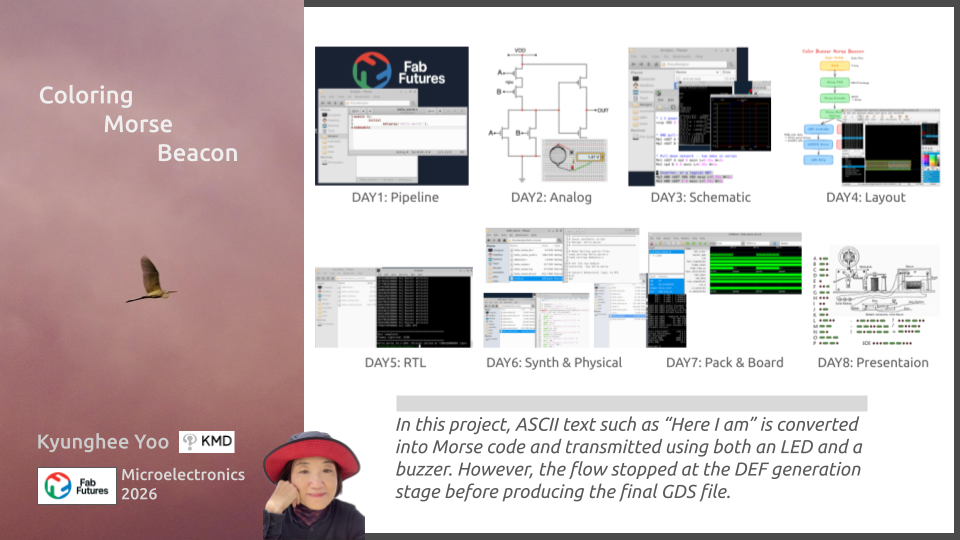
- Assignments 1. Introduction & Development Pipeline (Feb 16)
- Assignments 2. Analog basics (Feb 19)
- Assignments 3. Schematic Design & Simulation (Feb 23)
- Assignments 4. Layout & Fabrication (Feb 26)
- Assignments 5. RTL Design & Verification (Mar 2)
- Assignments 6. Synthesis & Physical Design (Mar 5)
- Assignments 7. Packaging & Board Design (Mar 9)
- Final Presentation “Coloring Wing” (Mar 12)
- Supplementary Report (Mar 19)
Life is brief, Day unfolds slowly, Moment lasts forever.
-
The fabrication process was as demanding as solving mathematical equations; however, in the realm of machine logic, there is no room for emotion—only the definitive binary of ‘on’ or ‘off.’ Human relationships, by contrast, offer no such clear answers. Because people can never be treated as mere ‘everyone’ or ‘anyone,’ my history is a series of failures and regrets. Yet, if that rare moment of real connection arrives once more, let us look into each other’s faces and be truly glad. (Mar 21)

-
The creation begins only when you move beyond the fear of unkonwn and the shame of imperfection. We must appreciate the careful discretion and unwavering resolution of the creative designers. (Mar 19)
-
The greatest value I’ve gained isn’t just new knowledge—it’s the realization of how much I have yet to learn. I am particularly grateful for the discreet and thoughtful atmosphere of our Microelectronics class — it feels as if we are all walking together along a kind of Pilgrim’s Way. I hope our paths cross again. (Mar 18)
-
Appreciation for someone who let me say “Hello, FAB,” who gave me the space to think and talk, to laugh and cry, to be foolish and hungry… and to become a little bit better human. As my gratitude for your atomic existence, I willingly present my findings today. (Mar 12)
-
Not live and love on autopilot. Love and live courageously. As long as the heart beats, pray and go on. (Mar 8)
-
I find it fascinating when different perspectives or properties meet and influence each other in understanding a single object or phenomenon. In my daily life, I am interested in the interaction between electronic devices and humans—areas that cannot be addressed through traditional forms of communication. At the moment, however, I feel as if I am walking through the fog of Verilog and SPICE. (Mar 7)
-
I focus on my assignments because of longing for emotional maturity and radical honesty. (Mar 5)
-
I’m wandering through the night, but the stars are shining, so… it’s still okay.(Mar 4)
-
I’m a stalker. Please be careful. To fly into the open future, I’m doing what I can. (Mar 3)
-
I aim to complete this course to survive in the upcoming school life. (Feb 23)
-
Hopely, I will design my microelectronics chips. (Feb 16)
Learning Objectives
- Write synthesizable Verilog for digital circuits (combinational and sequential logic, state machines)
- Simulate and verify designs using testbenches and waveform analysis
- Use open-source EDA tools (Yosys, OpenROAD, Magic) to take RTL to layout
- Understand the chip development pipeline from specification through fabrication
- Read and apply PDK design rules for a real manufacturing process (Sky130)
- Prepare a design for tapeout on an educational shuttle (Tiny Tapeout or similar) You’ll complete hands-on projects that could actually be fabricated on silicon.
Project Overview
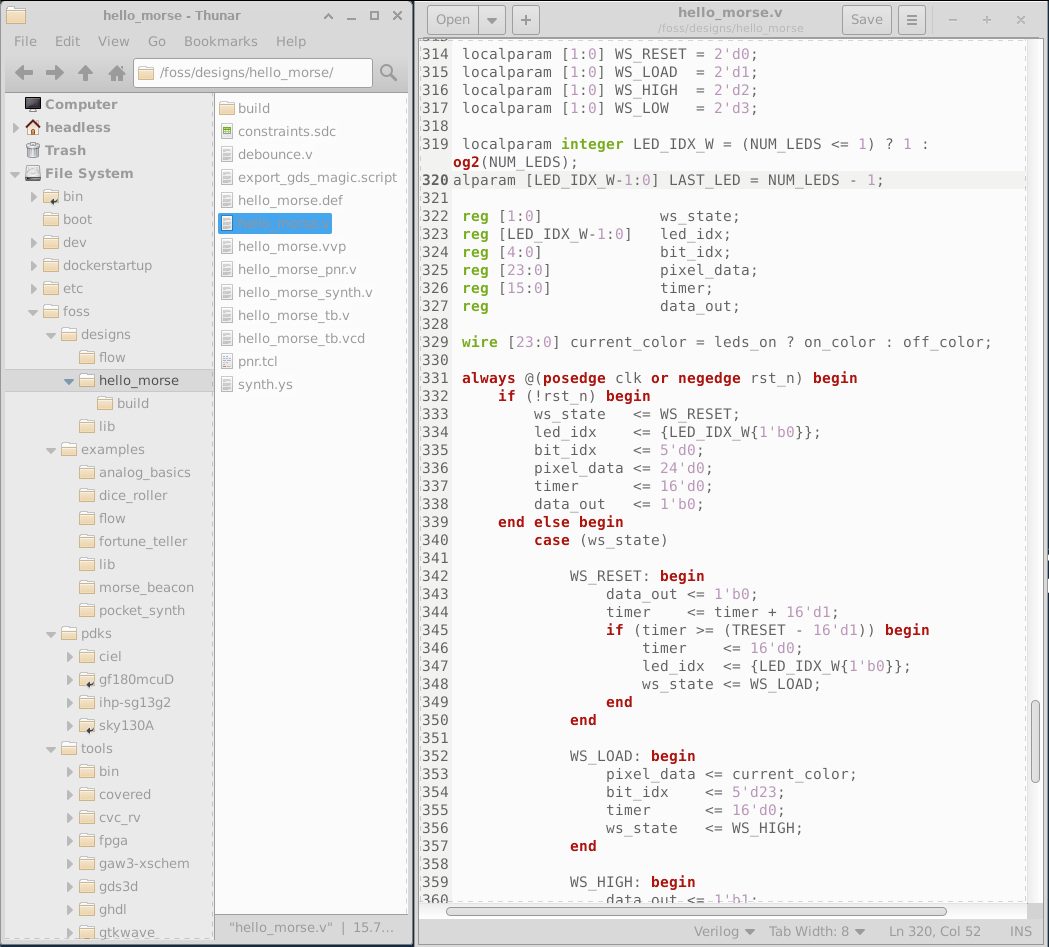
// ============================================================================
// LED Color Buzzer Morse Beacon - Kyunghee Yoo - Microelectronics 2026
// hello_morse.v -Lint - I added Buzzer function and change the message.
// ============================================================================
//
// HOW IT WORKS:
//   1. Chip drives a strip of WS2812 (NeoPixel) LEDs
//   2. All LEDs flash together to send Morse code
//   3. Press button to change colors
//   4. Beep when LEDs are flashing (during dots and dashes)
//
// WHAT YOU'LL LEARN:
//   - Precise timing for serial protocols (WS2812)
//   - State machines for sequencing
//   - Encoding data (ASCII to Morse)
//   - Tone PWM generator
//   - Buzzer Control Logic (BUZZER_FREQ = 600)
//
// MORSE CODE TIMING:
//   - Dot  = 1 unit
//   - Dash = 3 units
//   - Gap between dots/dashes = 1 unit
//   - Gap between letters = 3 units
//   - Gap between words = 7 units
//
// ABOUT WS2812 LEDs:
//   These "smart" LEDs have a built-in chip. You send color data one bit
//   at a time using precise pulse widths:
//
//   Sending a '0' bit:        Sending a '1' bit:
//   0.4µs HIGH, 0.8µs LOW     0.8µs HIGH, 0.4µs LOW
//
//   Each LED needs 24 bits: 8 green, 8 red, 8 blue (yes, GRB order!)
//
// OTHER USES FOR THIS CODE:
//   - VU meter / level display (map input to number of lit LEDs)
//   - Battery gauge
//   - Progress bar
//   - Temperature indicator
//   - Binary counter display
//
// ============================================================================
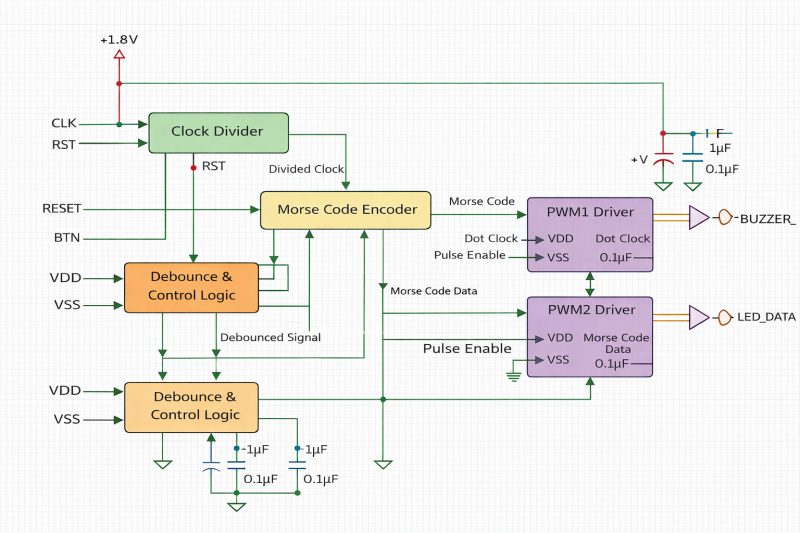
- Schematics
- Verilog
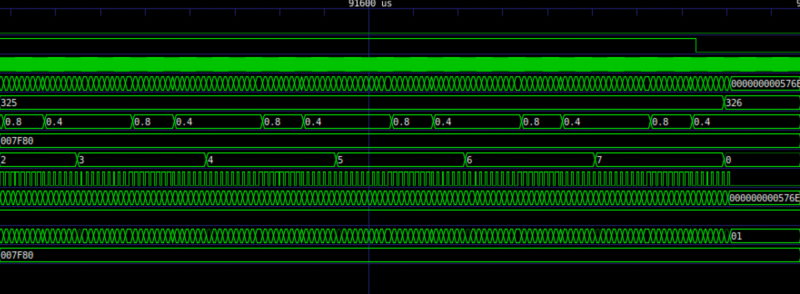
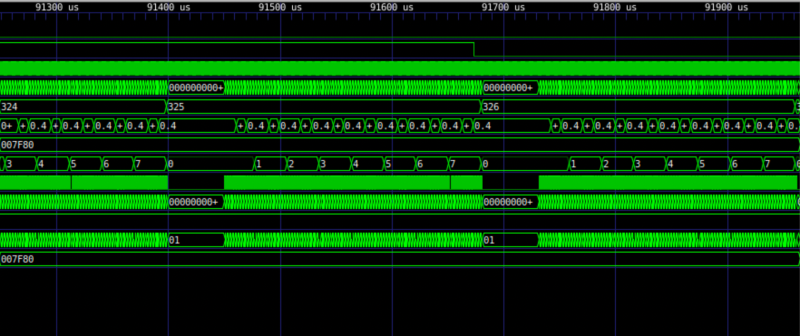
- Simulate Waveform
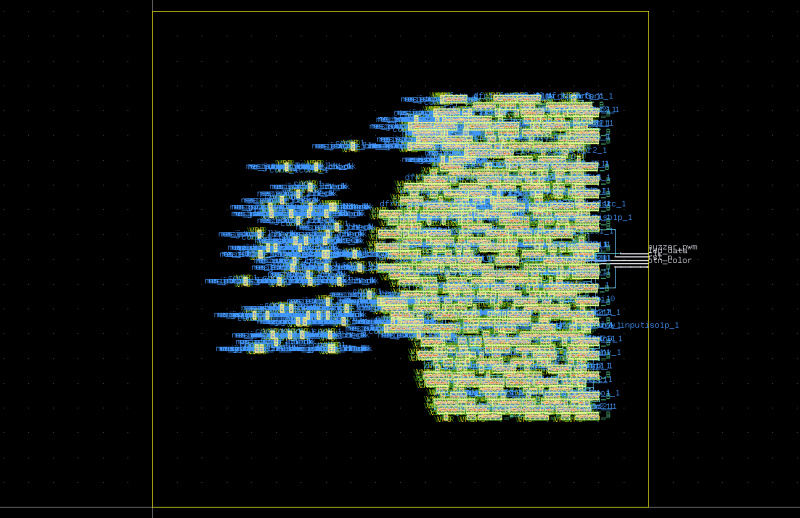
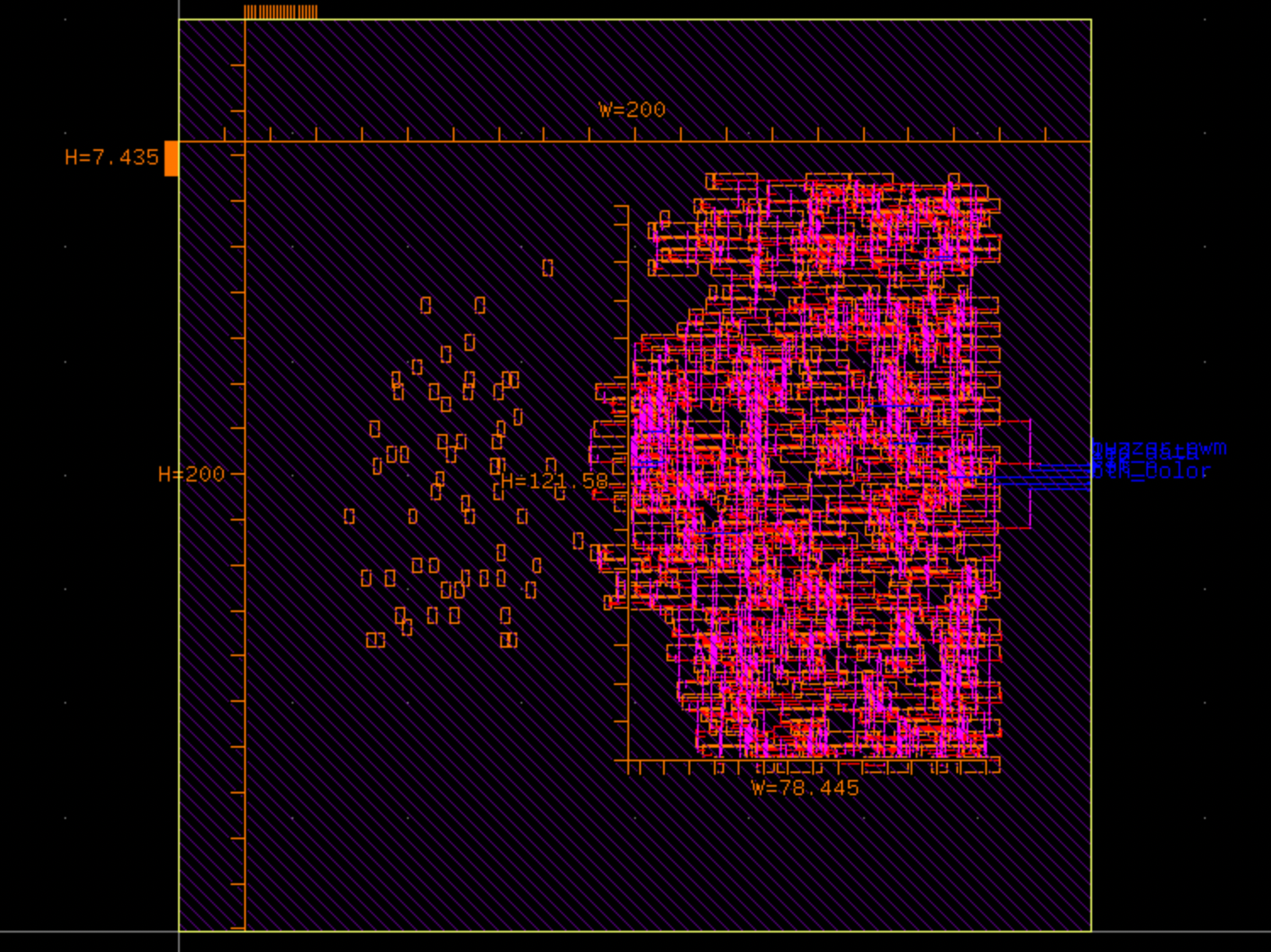
- Synthesize Layout
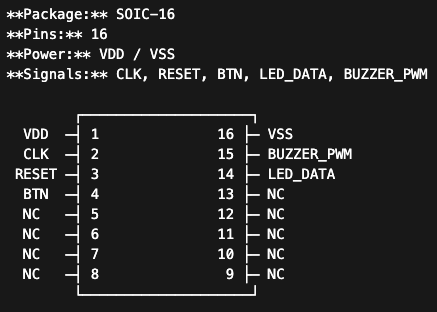
- Pin Assignments
| Pin | Name | Direction | Description |
|---|---|---|---|
| 1 | VDD | Power | Power supply |
| 16 | VSS | Power | Ground |
| 2 | CLK | Input | System clock |
| 3 | RESET | Input | Active-low reset (rst_n) |
| 4 | BTN | Input | Button input (btn_color) |
| 14 | LED_DATA | Output | WS2812 LED data signal |
| 15 | BUZZER_PWM | Output | 600 Hz buzzer output |
| 5–13 | NC | - | Not connected |
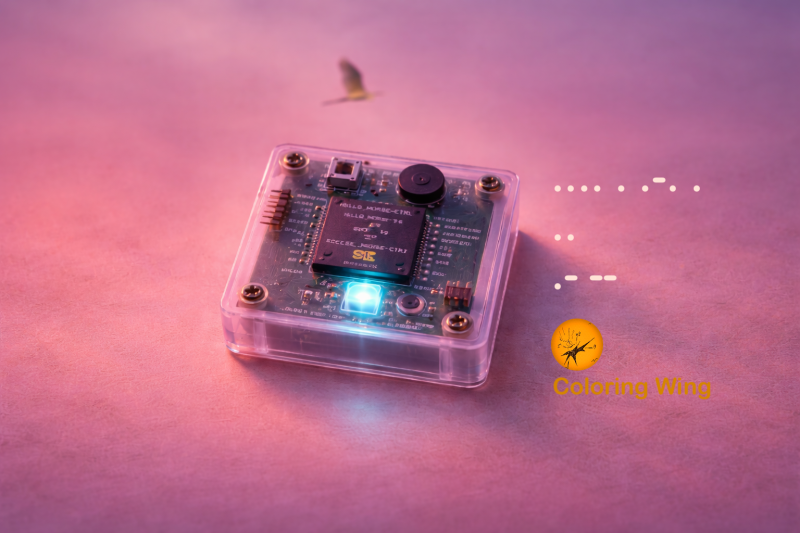
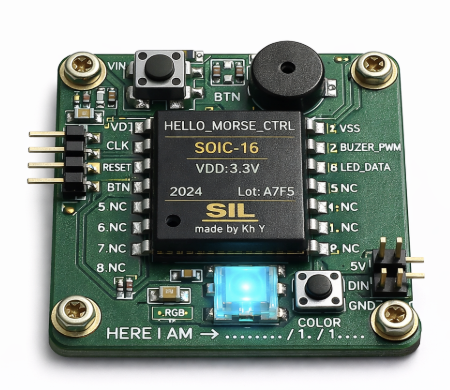
- Morse Beacon, IC Chip “SIL” inside (Concept Image)
No Hidden Magic.